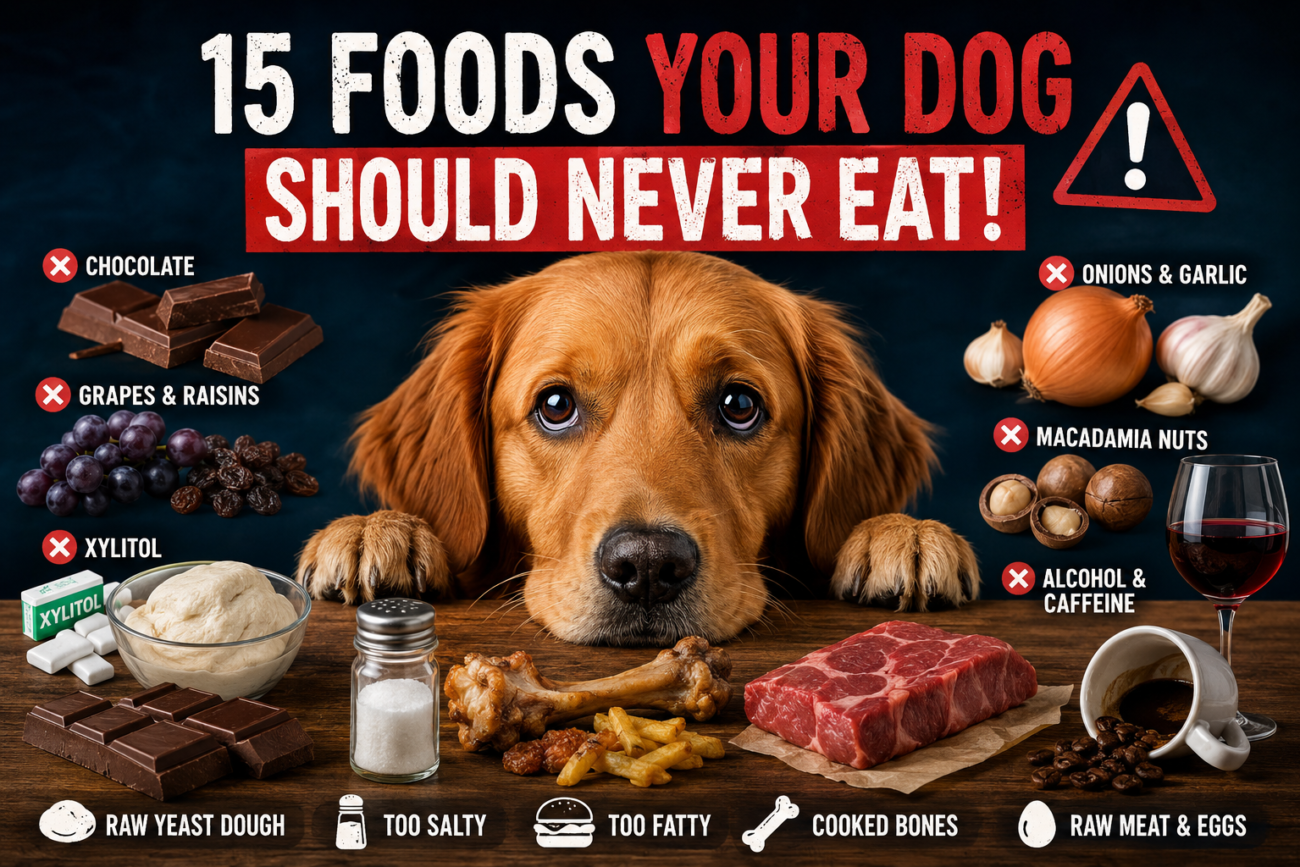
Foods You Should Never Feed Your Dog: 15 Dangerous Foods Every Dog Owner Should Know
Dogs love food. If you have a dog, you have probably experienced those big, hopeful eyes staring at you while you are eating. It can be tempting to share a bite of your meal, especially when your dog seems interested in everything you eat.
But not every human food is safe for dogs.
Some foods that are perfectly normal for humans can cause severe poisoning, digestive problems, kidney damage, neurological symptoms, or even life-threatening complications in dogs. The risk can also depend on the type of food, the amount eaten, the dog’s size, and the ingredients used in a particular product.
Knowing which foods are dangerous can help you prevent an accidental poisoning and react quickly if your dog gets into something it should not have.
In this guide, we explain 15 foods and food-related items you should keep away from your dog, why they can be dangerous, what symptoms to watch for, and what you should do if your dog accidentally eats one.
Important: This article is for general educational purposes and is not a substitute for veterinary advice. If your dog has eaten a potentially toxic food, contact your veterinarian or an emergency veterinary clinic as soon as possible.
1. Chocolate
Chocolate is one of the best-known foods that dogs should never eat.
Chocolate contains compounds called methylxanthines, particularly theobromine and caffeine. Dogs process these substances differently from humans, and consuming enough can cause serious health problems.
The risk is not exactly the same for every type of chocolate. Dark chocolate, baking chocolate, and cocoa powder generally contain higher concentrations of these compounds than milk chocolate.
Possible symptoms include:
- Vomiting
- Diarrhea
- Restlessness or hyperactivity
- Excessive thirst or urination
- Rapid or abnormal heart rhythm
- Tremors
- Seizures
- In severe cases, death
According to the ASPCA, the higher the cacao concentration, the greater the toxicity risk.
What if my dog ate chocolate?
Do not simply wait for symptoms to appear.
Try to determine:
- What type of chocolate was eaten
- Approximately how much was consumed
- When your dog ate it
- Your dog’s approximate weight
Keep the packaging if possible. The information on the package can help a veterinarian assess the situation.
Chocolate products can also contain other dangerous ingredients, such as raisins, macadamia nuts, or xylitol, which can create additional risks.
2. Grapes and Raisins
Grapes and raisins may look like harmless snacks, but they can be extremely dangerous for dogs.
Ingestion has been associated with kidney damage and potentially kidney failure. One important problem is that it can be difficult to predict exactly how much will cause a serious reaction in an individual dog.
That means you should not assume that a small amount is automatically safe.
Grapes and raisins can appear in many foods, including:
- Trail mix
- Cookies
- Cakes
- Breakfast cereals
- Granola
- Baked goods
- Some breads
ASPCA identifies grapes and raisins as foods that can cause kidney damage in dogs.
Possible warning signs
A dog that has eaten grapes or raisins may develop:
- Vomiting
- Lethargy
- Increased thirst
- Increased urination
- Loss of appetite
- Weakness
- Signs associated with kidney problems
If you know or suspect that your dog has eaten grapes or raisins, contact a veterinarian promptly rather than waiting to see whether symptoms develop.
3. Xylitol
Xylitol is one of the ingredients dog owners need to be especially careful about.
Xylitol is a sugar substitute used in many products marketed as sugar-free or reduced-sugar.
It may be found in:
- Sugar-free chewing gum
- Sugar-free candy
- Mints
- Some peanut and nut butters
- Baked goods
- Sugar-free desserts
- Some dietary supplements
- Certain medicines
- Toothpaste and mouthwash
The FDA warns that xylitol can be poisonous to dogs and can cause a rapid release of insulin, resulting in dangerously low blood sugar. Serious complications can also include liver damage.
Symptoms can include:
- Vomiting
- Weakness
- Reduced activity
- Difficulty walking
- Loss of coordination
- Collapse
- Tremors
- Seizures
The FDA notes that signs can begin rapidly after ingestion.
Always check labels
Never assume that a product is safe simply because it is labeled “sugar-free.”
Check the ingredient list.
Xylitol may also be listed under alternative terminology, including birch sugar or wood sugar.
If your dog has consumed a product containing xylitol, contact a veterinarian or emergency veterinary clinic immediately.
4. Onions
Onions can be harmful to dogs and should not be intentionally fed to them.
This includes onions in different forms, such as:
- Raw onions
- Cooked onions
- Dried onions
- Onion powder
- Foods containing significant amounts of onion
Onions belong to the Allium family. According to the ASPCA, Allium vegetables can cause gastrointestinal irritation and damage to red blood cells, potentially resulting in anemia.
This is especially important because onion powder can be hidden in many human foods.
For example, a dog might consume onion without the owner realizing it because it was included in:
- Soup
- Sauce
- Seasoning mixes
- Processed foods
- Gravies
- Prepared meals
If your dog has eaten a significant amount of onion or a food heavily seasoned with onion, speak with your veterinarian.
5. Garlic
Garlic is closely related to onions and should also be kept away from dogs.
It can be found in much more than fresh garlic cloves.
Watch out for:
- Garlic powder
- Garlic salt
- Garlic seasoning
- Garlic sauces
- Garlic bread
- Prepared foods containing garlic
Garlic and other Allium species can cause gastrointestinal irritation and damage to red blood cells in dogs.
Because garlic powder is concentrated, foods containing seasoning can be particularly easy to overlook.
A small accidental exposure does not automatically mean your dog will become seriously ill, but you should contact your veterinarian if you are concerned about the amount consumed.
6. Chives and Other Allium Vegetables
Onions and garlic are not the only members of this problematic group.
Chives and related Allium vegetables can also pose a risk to dogs.
The important lesson is simple:
Do not intentionally feed your dog foods heavily seasoned with onion, garlic, chives, or similar Allium ingredients.
These ingredients are especially easy to miss when they are incorporated into sauces, soups, seasonings, and prepared foods.
7. Macadamia Nuts
Macadamia nuts are another food that dogs should avoid.
Dogs that ingest macadamia nuts can develop neurological and gastrointestinal symptoms.
Possible signs include:
- Weakness
- Difficulty walking
- Lack of coordination
- Vomiting
- Tremors
- Depression or unusual lethargy
- Increased body temperature
The ASPCA specifically identifies macadamia nuts as a toxic food for dogs.
Be particularly careful with foods such as cookies, cakes, chocolate-covered nuts, and trail mixes because a dog may eat the nuts without you realizing it.
And remember that a food containing both chocolate and macadamia nuts can involve more than one potential hazard.
8. Alcohol
Alcohol should never be intentionally given to a dog.
Dogs are much smaller than humans in many cases, so even an amount that seems insignificant to a person can represent a much larger exposure relative to the animal’s body size.
Alcohol can be found in:
- Beer
- Wine
- Spirits
- Cocktails
- Alcohol-containing desserts
- Some food preparations
Keep alcoholic drinks away from dogs, particularly during parties and gatherings when drinks may be left on low tables or floors.
If your dog drinks alcohol or consumes an alcohol-containing product, contact a veterinarian for advice.
9. Coffee and Caffeine
Coffee is not safe for dogs.
Caffeine and related methylxanthines can affect the nervous and cardiovascular systems.
Potential symptoms include:
- Restlessness
- Vomiting
- Diarrhea
- Excessive thirst
- Excessive urination
- Rapid heart rate
- Abnormal heart rhythm
- Tremors
- Seizures
The ASPCA lists coffee and other caffeine-containing products among foods and drinks that can be toxic to pets.
Remember that caffeine is not limited to a cup of coffee.
Potential sources include:
- Coffee grounds
- Energy drinks
- Tea
- Caffeinated supplements
- Certain medications
- Caffeine-containing foods
Never give your dog coffee, energy drinks, or caffeinated beverages.
10. Raw Yeast Dough
Raw yeast dough can create a particularly dangerous situation inside a dog’s stomach.
When a dog eats raw dough containing yeast, the dough can continue to expand in the warm environment of the stomach.
According to the ASPCA and veterinary guidance, this can lead to stomach distension and potentially dangerous complications. Fermentation can also produce ethanol, creating an additional alcohol-related risk.
Potential signs can include:
- Abdominal swelling
- Pain
- Vomiting
- Weakness
- Disorientation
- Difficulty breathing
- Signs of bloating
Raw bread dough should therefore be kept completely out of your dog’s reach.
This is especially important when baking at home.
11. Very Salty Foods
Dogs should not be given large amounts of very salty foods.
Excessive salt intake can cause increased thirst and urination and, in serious cases, abnormal electrolyte levels and neurological symptoms.
Potential warning signs of excessive salt exposure include:
- Vomiting
- Diarrhea
- Increased thirst
- Increased urination
- Depression
- Tremors
- Seizures
The ASPCA lists excessive salt intake as a potential source of salt toxicity in pets.
Avoid giving dogs large quantities of foods such as:
- Salty chips
- Very salty processed meats
- Heavily salted snacks
- Large amounts of salty leftovers
Dogs do not need heavily salted human snacks as treats.
12. Very Fatty Foods
Not every fatty food is technically poisonous, but foods that are extremely high in fat can cause digestive problems and may contribute to pancreatitis in some pets.
Examples include:
- Greasy fried foods
- Large amounts of fatty meat
- Heavy sauces
- Greasy leftovers
- Large amounts of butter
- Fat trimmings
The ASPCA notes that high-fat foods can cause vomiting and diarrhea and may contribute to pancreatitis in some pets.
The safest approach is to avoid giving your dog large quantities of greasy human food.
13. Cooked Bones
Bones may seem like a natural treat for dogs, but cooked bones can be dangerous.
They can break or splinter and potentially cause:
- Mouth injuries
- Choking
- Gastrointestinal injury
- Intestinal obstruction
- Other serious digestive-tract complications
The ASPCA warns that bones can cause gastrointestinal injury or obstruction and may sometimes require surgery.
This is why leftover cooked bones from meals should not simply be thrown to your dog.
Put them somewhere your dog cannot access them.
14. Raw Meat and Raw Eggs
Raw meat and raw eggs are not necessarily “poison” in the same way as chocolate or xylitol, but they can carry food-safety risks.
Raw animal products can contain bacteria such as:
- Salmonella
- E. coli
These organisms can potentially affect both pets and humans.
The ASPCA notes that raw meat and raw eggs can contain bacteria harmful to pets and people.
There are different approaches to feeding dogs, and some owners choose raw diets. However, if you are considering a raw-food diet for your dog, it is best to discuss it with a veterinarian or qualified veterinary nutrition professional rather than improvising a diet from raw ingredients.
15. Foods Containing Hidden Toxic Ingredients
One of the biggest problems for dog owners is that dangerous ingredients are not always obvious.
A dog may not eat a dangerous food directly. Instead, it may consume a human product that contains a dangerous ingredient.
Examples include:
Chocolate desserts
A brownie may contain:
- Chocolate
- Cocoa
- Raisins
- Macadamia nuts
- Xylitol in some sugar-free recipes
Sugar-free products
A sugar-free product may contain xylitol.
Trail mix
Trail mix may contain:
- Raisins
- Chocolate
- Macadamia nuts
- Other nuts
Sauces and seasonings
They may contain:
- Onion powder
- Garlic powder
- Excessive salt
The FDA specifically recommends checking ingredient labels for xylitol, particularly in products marketed as sugar-free.
What About Avocado?
Avocado is often included in lists of foods that dogs should not eat, but the situation is more nuanced than it is with chocolate, grapes, or xylitol.
According to the ASPCA, avocado is primarily a significant toxicity concern for certain other animal species rather than dogs. However, avocado can still create problems depending on the part consumed and the amount, and the large pit presents a choking or gastrointestinal obstruction hazard.
For this reason, it is better not to let your dog chew on avocado pits or eat large amounts of avocado.
If your dog has swallowed an avocado pit, contact your veterinarian because the concern is not simply toxicity—it can also be a physical obstruction.
What Should You Do If Your Dog Eats Something Dangerous?
If your dog has eaten a potentially toxic food, the most important thing is to act quickly and avoid guessing.
Step 1: Identify what your dog ate
Try to determine exactly what the food was.
For example:
- Dark chocolate
- Milk chocolate
- Grapes
- Raisins
- Sugar-free gum
- Garlic
- Onion
- Macadamia nuts
Step 2: Estimate how much was eaten
If possible, estimate the amount.
Even an approximate amount can be useful to your veterinarian.
Step 3: Find the packaging
Keep the product packaging, ingredient list, or label.
This is especially important if the product might contain xylitol or other hidden ingredients.
Step 4: Note when it happened
Write down approximately when your dog ate the food.
Step 5: Contact your veterinarian
Do not wait for symptoms if you know your dog has consumed a potentially dangerous substance.
Some toxic exposures can cause serious complications before obvious symptoms appear.
For xylitol specifically, the FDA advises contacting a veterinarian, emergency veterinary clinic, or animal poison-control service immediately after suspected ingestion.
Step 6: Do not try random home remedies
Do not give your dog another food or substance in an attempt to “neutralize” the toxin unless a veterinarian specifically tells you to do so.
Treatment depends on the substance, amount, timing, and condition of the dog.
Signs of Possible Food Poisoning in Dogs
The symptoms of food poisoning vary depending on what the dog consumed.
Potential warning signs include:
- Vomiting
- Diarrhea
- Excessive thirst
- Excessive urination
- Loss of appetite
- Weakness
- Lethargy
- Tremors
- Difficulty walking
- Restlessness
- Abnormal heart rate
- Abdominal pain
- Collapse
- Seizures
- Difficulty breathing
Some symptoms can appear quickly, while others may develop later.
For example, the FDA warns that xylitol exposure can cause rapid hypoglycemia, while serious liver-related complications can also develop later.
That is why the absence of immediate symptoms does not necessarily mean everything is fine.
How to Prevent Your Dog From Eating Dangerous Foods
Prevention is much easier than dealing with an emergency.
Here are some simple habits that can make your home safer.
Keep human food off the floor
Dogs are naturally curious and may eat something before you notice it.
Clean up dropped food immediately.
Keep trash cans secure
Food scraps can contain:
- Chicken bones
- Chocolate wrappers
- Onion-containing leftovers
- Raisins
- Fatty foods
- Moldy food
A dog that gets into the trash can consume several dangerous ingredients at once.
Read ingredient labels
Especially check products labeled:
- Sugar-free
- Low sugar
- Keto
- Reduced sugar
Look specifically for xylitol.
Be careful during holidays and parties
Many accidental poisonings happen when dogs have easy access to human food.
During gatherings, keep drinks, desserts, chocolate, candy, and leftovers away from dogs.
Teach children not to feed the dog without permission
Children may not know which foods are dangerous.
Make sure everyone in the household knows the basic foods your dog must avoid.
A Quick Dog-Safe Food Checklist
Before giving your dog something from your plate, ask:
Does it contain chocolate?
If yes, don’t give it.
Does it contain grapes or raisins?
If yes, don’t give it.
Does it contain xylitol?
If yes, keep it completely away from your dog.
Does it contain onion, garlic, or chives?
Avoid it.
Does it contain macadamia nuts?
Avoid it.
Is it extremely salty or greasy?
It is better not to give it.
Does it contain cooked bones?
Do not give them.
Is it raw yeast dough?
Keep it away from your dog.
When in doubt, choose a dog-specific treat instead of experimenting with human food.
What Human Foods Can Dogs Eat?
The fact that many human foods are unsafe does not mean dogs cannot enjoy any foods from the kitchen.
Some foods can be suitable as occasional treats when prepared appropriately, but portion size and your dog’s individual health still matter.
Examples commonly used as dog treats include certain plain fruits and vegetables and appropriately prepared lean foods.
However, avoid adding:
- Salt
- Onion
- Garlic
- Spices
- Sugar
- Xylitol
- Heavy sauces
Always remove dangerous seeds, pits, stems, or other parts when appropriate.
If your dog has a medical condition, food allergy, sensitive stomach, or special diet, ask your veterinarian before introducing new foods.
Final Thoughts
Dogs may look at us as if every meal belongs to them, but sharing human food is not always harmless.
The most important foods and ingredients to remember are:
- Chocolate
- Grapes
- Raisins
- Xylitol
- Onions
- Garlic
- Chives
- Macadamia nuts
- Alcohol
- Caffeine
- Raw yeast dough
- Excessively salty foods
- Very fatty foods
- Cooked bones
- Certain raw animal products
Among these, xylitol, chocolate, grapes and raisins, onions and garlic, and macadamia nuts deserve particular attention because they are well-established hazards for dogs. ASPCA data also continues to identify human foods such as grapes, raisins, xylitol-containing products, onions, garlic, and chocolate among important pet toxin exposures.
The best rule is simple:
If you are not sure whether a food is safe for your dog, do not give it until you have checked with a reliable veterinary source or your veterinarian.
A few seconds of caution can prevent a serious emergency.
Frequently Asked Questions
What is the most dangerous food for dogs?
There is no single food that is equally dangerous for every dog because toxicity depends on the substance, amount, concentration, and the dog’s size. Chocolate, xylitol, grapes, raisins, onions, garlic, and macadamia nuts are among the important foods and ingredients that dog owners should keep away from their pets.
Can dogs eat chocolate?
No. Chocolate contains methylxanthines such as theobromine and caffeine, which can cause serious symptoms in dogs. Dark chocolate and baking chocolate generally present greater toxicity concerns because they contain higher concentrations.
Can dogs eat grapes?
Grapes should not be intentionally fed to dogs. They have been associated with kidney damage and potentially kidney failure.
Can dogs eat raisins?
No. Raisins can be dangerous to dogs and have been associated with kidney damage. If your dog eats raisins, contact your veterinarian promptly.
Is xylitol dangerous for dogs?
Yes. Xylitol can cause a rapid release of insulin in dogs, leading to dangerously low blood sugar. It can also cause severe complications including liver damage.
Can dogs eat garlic?
Garlic should not be intentionally fed to dogs. Garlic belongs to the Allium family and can cause gastrointestinal irritation and red blood cell damage.
Can dogs eat onions?
Onions can be harmful to dogs and can damage red blood cells, potentially resulting in anemia.
Can dogs eat macadamia nuts?
No. Macadamia nuts can cause weakness, coordination problems, vomiting, tremors, and increased body temperature in dogs.
What should I do if my dog eats a toxic food?
Contact your veterinarian or an emergency veterinary clinic as soon as possible. Tell them what your dog ate, approximately how much was consumed, when it happened, and your dog’s approximate weight. Keep the product packaging if available.
Should I make my dog vomit?
Do not attempt to induce vomiting or give your dog home remedies unless a veterinarian or qualified animal poison-control professional specifically instructs you to do so. The appropriate response depends on what was eaten and the dog’s condition.
Sources and Further Reading
- ASPCA — People Foods to Avoid Feeding Your Pets
- FDA — Paws Off! Xylitol Is Toxic to Dogs
- FDA — Paws Off Xylitol; It’s Dangerous for Dogs
- ASPCA — The Top 10 Toxins of 2025
- American Kennel Club — Can Dogs Eat Bread?
Disclaimer: This article provides general information and should not replace professional veterinary advice. If you believe your dog has eaten a potentially toxic food, contact a veterinarian or emergency veterinary service immediately.
