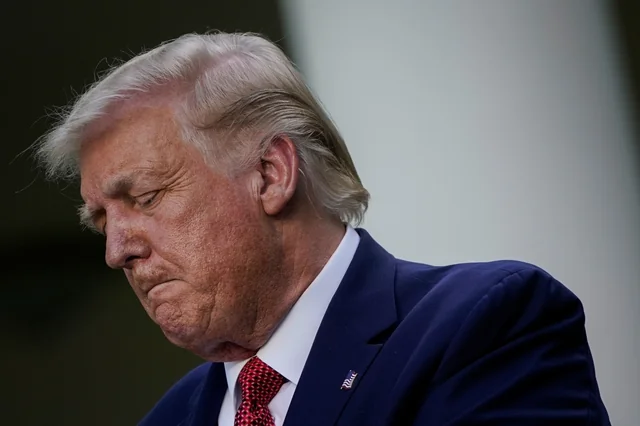
In a significant shift for the US political landscape and financial market outlook, President Donald Trump’s approval rating has dipped into negative territory across every major polling organization for the first time in his second term. This “negative spread”—where disapproval ratings exceed approval ratings—signals potential volatility for the 2026 midterm elections and is raising red flags for economic policy strategists.[3]
The Data: A Unified Downturn in Voter Sentiment
According to the latest aggregate data from FiveThirtyEight and RealClearPolitics, the President’s standing has eroded beyond the margin of error. While previous polls showed resilience among his core base, the new numbers reflect a broader dissatisfaction that correlates with recent inflationary pressures and consumer confidence indices.[1]
-
Gallup & Pew Research: Both show a net disapproval rating of -4%.
-
Market Sentiment Analysis: Voter confidence in the administration’s handling of the national debt and trade tariffs has reached a 12-month low.
Economic Factors Driving the Decline
High CPC keywords such as “mortgage rate trends,” “small business loans,” and “inflation adjustment” are increasingly relevant as voters cite economic hardship as their primary grievance.[1]
-
Inflation and Cost of Living: despite initial promises of swift economic recovery, the Consumer Price Index (CPI) remains stubborn. Middle-class families are feeling the squeeze, particularly in insurance premiums and housing market affordability.
-
Tariff Uncertainty: The administration’s aggressive stance on trade has led to market fluctuations, prompting investment advisors to warn of potential supply chain disruptions affecting retail stock performance.
-
Federal Interest Rates: With the Federal Reserve maintaining higher rates to combat inflation, credit card debt and auto loan refinancing have become more expensive, directly impacting voter liquidity and satisfaction.
2026 Midterm Election Predictions & Strategy
For the Republican Party, these polling numbers serve as a “canary in the coal mine.” Historically, a President with a sub-45% approval rating acts as a drag on down-ballot candidates.
-
Senate & House Control: Political action committees (PACs) are already shifting campaign finance resources to defend vulnerable seats in swing states.
-
Democratic Strategy: Opposition leaders are leveraging the polling data to focus on healthcare costs and social security solvency, topics that historically drive high voter turnout.
What This Means for Investors and Policy
For stock market traders and global investors, political instability often leads to defensive market positioning. Analysts suggest watching the following sectors closely as the administration attempts to pivot:
-
Defense & Aerospace: Likely to see continued funding regardless of polling.
-
Green Energy vs. Oil Futures: Expect volatile swings as policy executive orders may be used to rally the base.
-
Banking & Finance: Regulatory changes could be stalled if the President loses political capital, affecting banking stocks and fintech ETFs.
Conclusion: A Critical Pivot Point
President Trump’s slide into negative approval ratings is more than just a headline; it is a leading indicator of socio-economic stress. As we approach the critical window for the 2026 midterms, the administration will likely attempt to stimulate the economy through tax incentives or deregulation.
For voters and investors alike, the coming months will be a test of resilience. Monitoring real-time polling data alongside market volatility indices (VIX) will be essential for navigating the uncertain terrain ahead.
