news

NPR scores massive victory against Trump — CPB FORCED to restore $36 million deal after judge shreds their excuse.
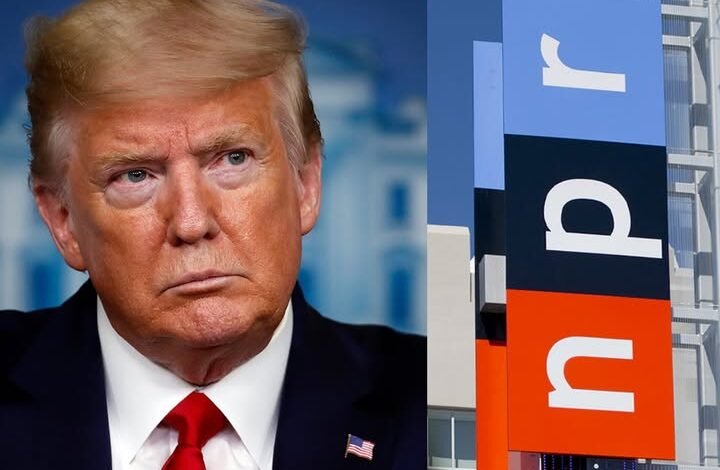
Donald Trump’s crusade to kneecap public media just suffered a massive legal humiliation — and it’s one that exposes the breathtaking corruption behind his attempts to silence reporters who refuse to bow to him.
On Monday, the Corporation for Public Broadcasting quietly crawled back to court and agreed to revive a $36 million contract with NPR — the very contract it killed after intense pressure from the Trump White House.
This reversal didn’t happen because CPB suddenly rediscovered its mission. It happened because a federal judge all but laughed CPB’s defense out of the courtroom.
Judge Randolph Moss told CPB lawyers point-blank: their story wasn’t credible. Their excuse? That they suddenly dumped NPR to “foster digital innovation.”
Sure. Totally normal to discover a passion for innovation the day after a top Trump official told them not to “do business with NPR.”
The truth spilled out in depositions: CPB’s board chair and executives met with a White House budget officer who openly declared her “intense dislike for NPR.” And within 48 hours, CPB reversed a decades-long partnership — clearly terrified of a president hell-bent on censoring journalists who report facts he doesn’t like.
And yet, in its court filing, CPB still pretends it did nothing wrong.
Yeah, right.
This entire fiasco happened because Trump turned public broadcasting into his newest culture-war punching bag. He smeared NPR and PBS as “radical, woke propaganda disguised as ‘news’” — because nothing triggers him more than reporters who can read, ask questions, or use verified information.
Then he went further: on May 1, he signed an executive order banning all federal money from going to NPR and PBS. That’s right — the self-proclaimed defender of “free speech” used government power to defund news organizations for reporting the truth.
NPR sued, alongside local stations. And CPB — the nonprofit created by Congress to protect public media from political interference — folded like a wet paper towel.
But CPB’s cowardice didn’t save it. Instead, the courts forced it to admit that Trump’s executive order was exactly the kind of political interference the law was designed to prevent.
Meanwhile, Trump’s allies in Congress took it even further, rescinding all $1.1 billion in future public broadcasting funds. The result? Layoffs at PBS, financial strain at NPR, and local stations across America left fighting for survival — all because Trump can’t stand journalism that doesn’t flatter him.
And now, the attempted purge has collapsed under the weight of its own corruption:
CPB is restoring the $36 million deal.
The judge is preparing to hear NPR’s First Amendment case.
And the Trump administration’s effort to silence public media is on track to become yet another spectacular legal backfire.
This isn’t just a victory for NPR. It’s a victory for the First Amendment, local journalism, and every community that depends on public media for real news — not propaganda.
Trump tried to defund the truth. The courts just told him: Not today. Not ever.